Full Mouth Dental Implants in Denver: All-on-4, All-on-X, and Fixed Teeth Options
When your teeth have been breaking down for years, it rarely affects only your mouth. You may stop ordering foods you love because chewing hurts. You may cover your mouth when you laugh, avoid photographs, or speak differently so no one notices your teeth. Some people become so accustomed to planning around dental pain or embarrassment that they do not realize how much of their life has slowly become smaller.
If you have searched for “permanent teeth instead of dentures,” “how to replace all my teeth,” or “full mouth dental implants near me,” you have probably encountered terms such as All-on-4, All-on-X, fixed dentures, implant-supported dentures, full-arch dental implants, and teeth in a day. It can be difficult to tell whether these are different procedures or different names for the same thing. In reality, they describe several ways dental implants can support a new set of teeth, and the best design depends on the person wearing them.
At The Denver Dentists & Implant Center, Dr. Kenneth Burson creates individualized plans for patients who need to rebuild or replace many teeth. The goal is not simply a different-looking smile. It is to restore comfort, stability, and function so you can eat, speak, and live without constantly thinking about your teeth.
Understanding Full Mouth Dental Implants, All-on-4, and All-on-X
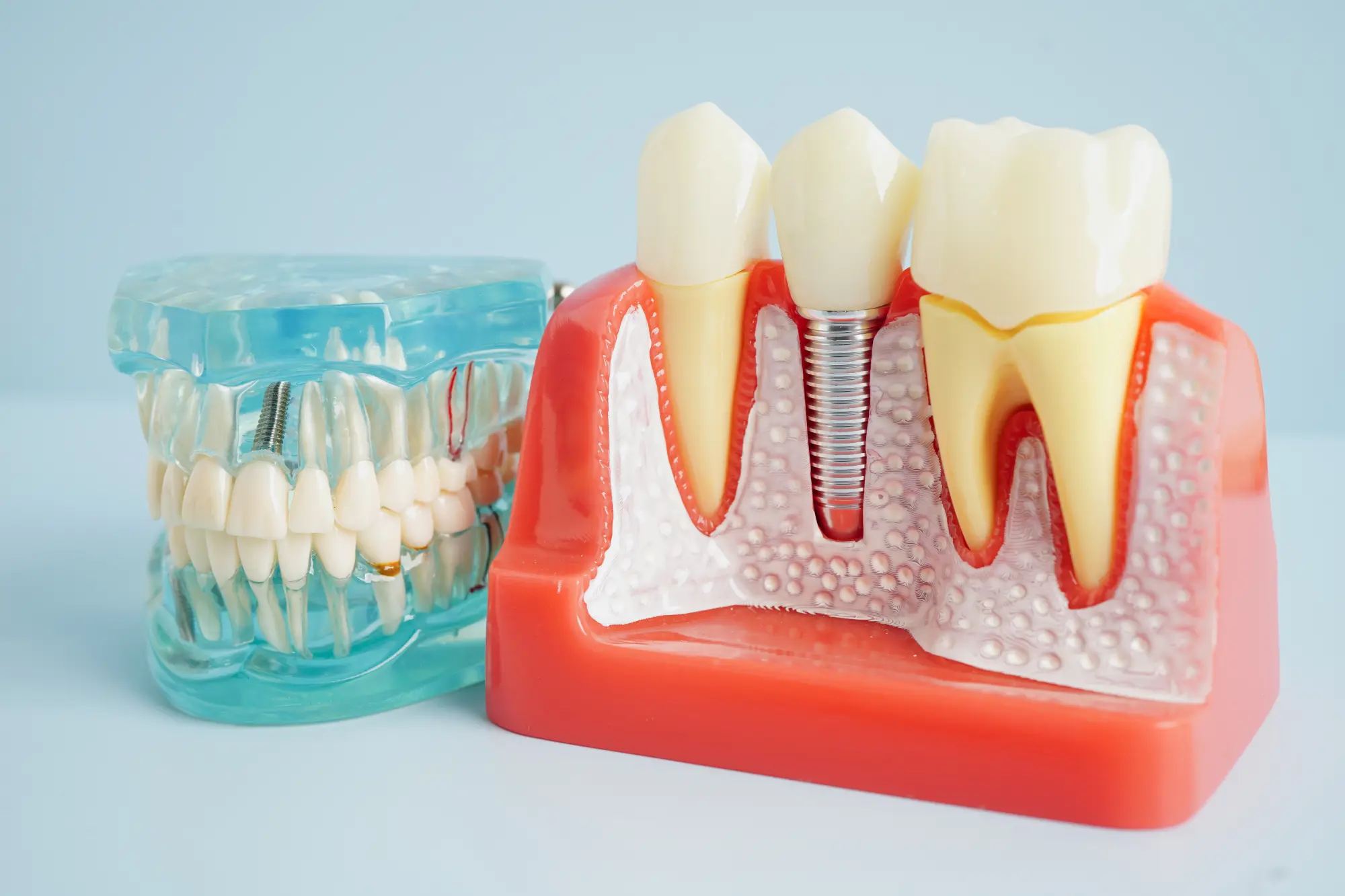
Full mouth dental implants replace most or all missing or failing teeth using implants placed in the jawbone. The implants act as anchors for a custom set of replacement teeth. Unlike traditional dentures, which rest on the gums, an implant-supported restoration gains stability from the implants underneath it. Depending on the treatment selected, the replacement teeth may be fixed in place or removable by the patient for cleaning.
“Full mouth” generally means treating both the upper and lower arches, while “full arch” means replacing all the teeth in either the upper or lower jaw. Some patients need both arches treated. Others may have one full arch restored while keeping healthy natural teeth in the opposing arch.
All-on-4 is a widely recognized name for a complete arch supported by four strategically positioned dental implants. All-on-X is a broader term for a full-arch restoration supported by the number of implants appropriate for that particular case. That may be four, five, six, or another number based on the patient’s bone, anatomy, bite, and restorative needs. Patients often use “All-on-4” as shorthand for any fixed full-arch treatment, but four implants are not automatically the right answer for every mouth. We do not begin with a predetermined number and try to make the patient fit it. Dr. Burson evaluates the entire situation before recommending an All-on-4, All-on-X, implant-supported denture, or another type of full mouth restoration.
Many All-on-4 and All-on-X restorations are fixed, which means the teeth stay securely attached to the implants rather than being removed by the patient every night. A dentist can remove the restoration when professional maintenance or repair requires it. An implant-supported removable denture, sometimes called a snap-in denture, attaches to implants for more stability than a traditional denture but can still be removed by the patient for cleaning. For some people, that provides the right balance of stability, hygiene access, and cost.
Patients often call fixed full-arch restorations “permanent teeth.” That is useful everyday language, but permanent should not be confused with maintenance-free. The implants are designed to remain in the jaw long-term, while the bridge attached to them experiences daily wear and may eventually require maintenance, repair, or replacement. Excellent home care, professional maintenance, general health, smoking, grinding and clenching, implant positioning, and restorative materials all influence long-term success.
Who May Be a Candidate?
Full mouth or full-arch dental implants may be considered when someone is missing most or all teeth, has multiple teeth that are broken or severely decayed, has advanced gum disease, struggles with loose dentures, or has extensive dental work that repeatedly fails. Many patients come to us because they can no longer chew comfortably or because they want a stable alternative to removable dentures. Others simply feel that their teeth are beyond repair and do not know where to begin.
That does not automatically mean every remaining tooth needs to be removed. Whenever possible and predictable, preserving healthy natural teeth can be an important part of treatment. Dr. Burson evaluates each tooth individually and as part of the complete bite. Some teeth may be strong enough to keep. Others may be restored with crowns, periodontal treatment, or another procedure. A tooth with a poor long-term outlook, however, may lead to infection, discomfort, repeated treatment, or failure beneath a larger restoration. The right plan may be full-arch implants, a combination of implants and restored natural teeth, or a comprehensive reconstruction using crowns, bridges, veneers, and other treatment.
Bone loss does not necessarily eliminate implant treatment either. When teeth have been missing for a long time, or when gum disease has damaged the supporting structures, the jawbone can lose volume. Dr. Burson uses CBCT 3D imaging to assess the height, width, and shape of the bone as well as nearby anatomy. Depending on what the scan shows, treatment may involve bone grafting, a particular implant position, a different number of implants, or an alternative restorative design. Even if you were told in the past that implants were not possible, a current comprehensive evaluation may reveal options worth discussing.
Many patients delay that evaluation because they feel embarrassed. People arrive at this point for all kinds of reasons: dental fear, genetics, health conditions, medication, finances, gum disease, grinding, difficult past experiences, or years spent caring for everyone but themselves. You do not have to explain your way into deserving care, and you do not need to fix anything before you come in. We will show you what we see, explain what may be saved or replaced, and help you understand the choices without judgment.
Can You Really Get Teeth in One Day?
Terms such as “teeth in a day” and “same-day dental implants” generally mean that dental implants are placed and a temporary set of teeth is attached the same day or shortly afterward. Some patients qualify, but not everyone does. Immediate temporary teeth depend on bone quality, implant stability, infection, gum health, bite forces, and overall health.
The teeth placed at surgery are generally a healing restoration rather than the final set. The implants still need time to integrate with the jawbone, and patients usually follow a modified diet while healing. Once the implants are ready, the final restoration is created around the patient’s bite, speech, facial features, comfort, tooth shape, and smile goals. Dr. Burson will explain whether immediate temporary teeth are appropriate for you and what to expect at each stage. We would rather give you an honest and predictable plan than promise a timeline your health cannot support.
What Do Full Mouth Dental Implants Cost?
There is no responsible single-price answer because full mouth implant care is not one standardized procedure. Cost depends on whether one or both arches are treated, the number and type of implants, extractions, bone grafting, sedation, surgical complexity, the temporary restoration, the design and material of the final teeth, and the care included after surgery.
When comparing fees, ask what the quote actually includes. Imaging, extractions, grafting, sedation, implant placement, temporary teeth, the final restoration, follow-up visits, and future maintenance may or may not be part of an advertised number. A low price can be appealing until you discover it represents only one portion of treatment.
Dental insurance may contribute toward certain procedures, although benefits vary significantly. After your evaluation, our team will provide a personalized treatment plan, explain the fees clearly, and discuss available payment and financing options. Full mouth dental implants are a major investment. Asking direct questions about cost does not make you difficult; it makes you informed.
Why Dr. Burson’s Training Matters
Full-arch implant treatment requires more than placing implants or making attractive teeth. The implants, bone, gums, bite, facial proportions, restorative materials, and replacement teeth must function as one system. Dr. Kenneth Burson, MS, DDS, FAGD, has more than 15 years of experience and extensive advanced education through respected organizations including Kois, the Spear Institute, the American Academy of Cosmetic Dentistry, and The Pathway’s hands-on implant training. He is a Fellow of the Academy of General Dentistry and a member of the American Academy of Implant Dentistry.
His training brings together implant dentistry, comprehensive diagnosis, restorative treatment, function, and esthetics. He looks beyond the teeth being replaced to evaluate the gums, bone, bite, jaw function, facial structure, remaining teeth, existing dentistry, health history, and long-term goals. We use digital X-rays, intraoral photography, digital scans, and CBCT 3D imaging to gather detailed information and plan carefully. Technology gives us better information. Training and clinical judgment turn it into the right plan.
Treatment begins with a conversation and comprehensive evaluation. We want to understand what is bothering you, what you miss being able to do, what you hope will change, and what concerns you have. Dr. Burson will explain which teeth may be saved, the available implant and restorative options, the expected timeline, healing needs, temporary teeth, final restoration, maintenance, and financial details. If treatment moves forward, we guide you through surgery, healing, the transition from temporary to final teeth, and long-term care.
At The Denver Dentists & Implant Center, our team brings more than 100 years of combined dental experience to patient care. We recommend treatment the way we would for our own families: thoughtfully, honestly, and with respect for the person making the decision.
A New Smile Can Reopen a Life
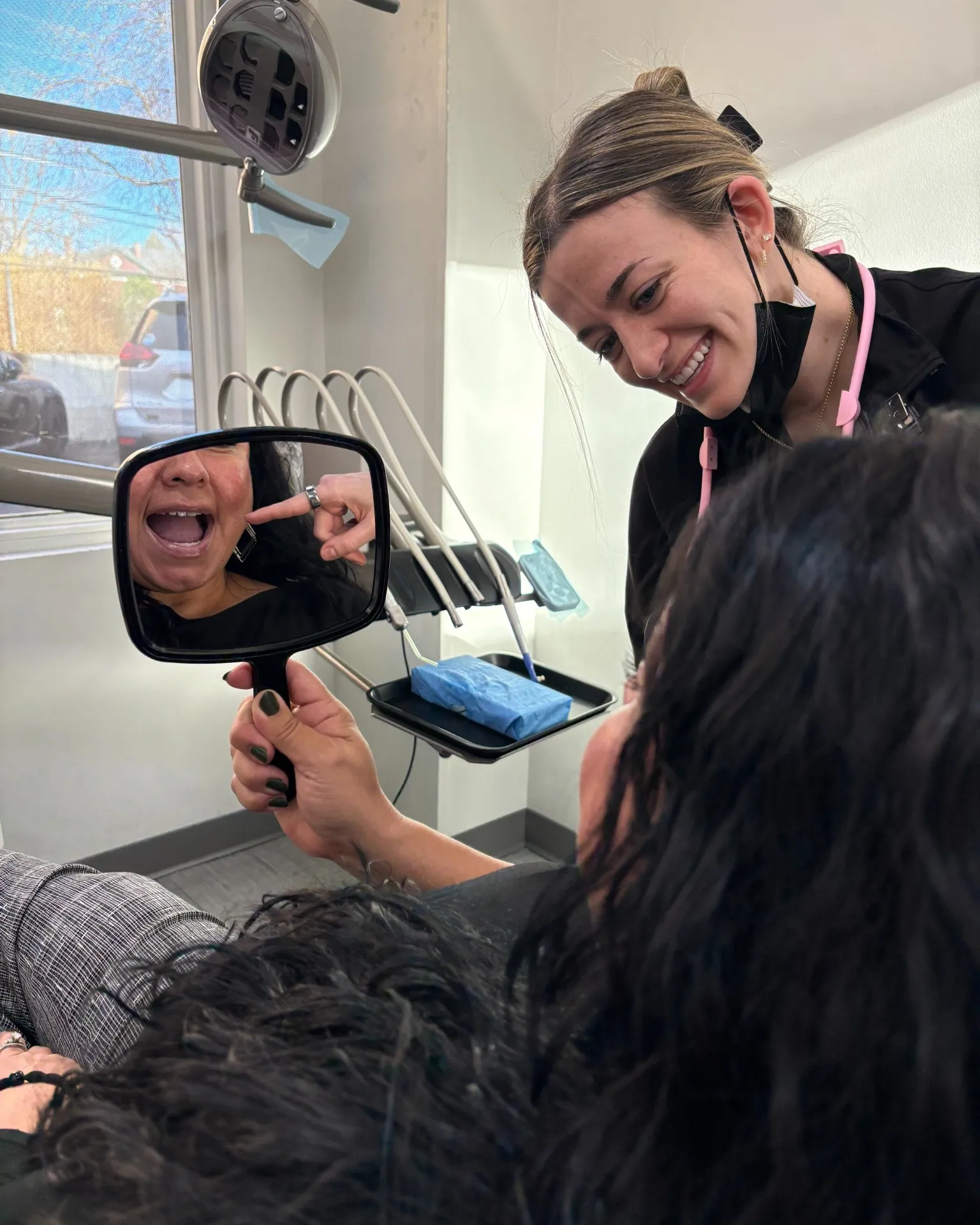
There is a moment we often see during a major smile transformation. A patient looks in the mirror and smiles without hesitation. Sometimes they laugh. Sometimes they cry. Sometimes they become quiet because they are seeing a version of themselves they have missed for a long time.
That reaction is not vanity. A smile is part of how we connect with other people and recognize ourselves. New teeth can mean eating dinner without choosing which side to chew on, speaking in a meeting without wondering whether someone is looking at your mouth, appearing in family photographs, accepting an invitation, going on a date, interviewing for a new job, or laughing without raising a hand to hide your teeth.
The clinical result matters: stable teeth, improved chewing, a balanced bite, and better oral health. But the emotional result can be just as meaningful. When patients no longer organize their lives around discomfort or embarrassment, they often feel free to be fully present again.
If missing, damaged, or failing teeth affect how you eat, speak, smile, or live, you may have more options than you realize. Schedule a full mouth dental implant consultation with The Denver Dentists & Implant Center in Denver, Colorado. Dr. Burson and our team will help you understand whether All-on-4, All-on-X, fixed full-arch implants, an implant-supported denture, or another personalized restoration may be right for you.
Your current smile is where we begin. It does not have to be where your story ends.
Written by The Denver Dentists team. Reviewed for clinical accuracy by Dr. Kenneth Burson, MS, DDS, FAGD. Dr. Burson is the owner dentist at The Denver Dentists & Implant Center in Denver, Colorado. He focuses on comprehensive restorative dentistry, dental implants, full-arch implant treatment, full mouth reconstruction, cosmetic dentistry, and long-term treatment planning.
Related Posts
Full Mouth Dental Implants in Denver: All-on-4, All-on-X, and Fixed Teeth Options
What If You Could Try On Your New Smile? Meet 3D-Printed Veneers in Denver
How Long Will My Dental Implant Last? A Denver Implant Dentist Explains