Digital Impressions for Same-Day Crowns in Denver: What to Expect
Reviewed by Dr. Kenneth Burson, MS, DDS, FAGD
If your last experience getting a dental crown involved a tray full of impression material, some uncomfortable minutes of waiting for it to set, a temporary crown, and another appointment weeks later, things have changed quite a bit.
Modern digital impressions have made the process faster, more comfortable, and more precise. At The Denver Dentists & Implant Center, digital scanning is also an important part of how we can design and create many same-day CEREC crowns in Denver without sending impressions to an outside dental lab or asking patients to come back weeks later.
Instead of filling a tray with impression material and waiting for it to harden in your mouth, a small digital scanner captures a detailed 3D model of your teeth and bite. For many patients, the scan itself takes only a minute or two. From there, that information can be used to design, mill, adjust, and place a custom crown, often during the same appointment.
The technology may be more advanced, but the benefit is pretty simple: less goop, less waiting, and fewer trips to the dentist.
What Is a Digital Dental Impression?
A digital impression is a detailed 3D scan of the teeth, gums, and bite. The dentist or dental team moves a small intraoral camera over the teeth while the scanner captures a series of images and combines them into a highly detailed digital model.
That model gives the dentist the information needed to evaluate the prepared tooth, understand how the upper and lower teeth fit together, and design the new restoration. Depending on the system being used, the scan data can also be converted into a digital file that communicates the exact shape and position of the teeth.
The experience is very different from a traditional impression. There is no large tray filled with material that needs to sit in the mouth while it sets. The scanner simply moves over the teeth and captures the necessary information digitally, making the process especially helpful for patients who have a sensitive gag reflex or simply remember traditional impressions a little too well.
Digital Impressions vs. Traditional Dental Impressions
Traditional dental impressions have been used successfully for decades, but they come with a few obvious drawbacks. Impression material has to be mixed, loaded into a tray, placed over the teeth, and held in position until it hardens. If there is an air bubble, void, distortion, or another issue with the impression, the entire process may need to be repeated.
Digital impressions remove many of those variables. The dentist can see the scan developing on a screen in real time and identify immediately if an area needs additional information. Rather than retaking the entire impression, the missing area can typically be rescanned quickly.
For patients, that means a process that is generally faster and more comfortable. For the dentist, it means having a highly detailed digital model available immediately instead of waiting for a physical impression to be processed or shipped to a laboratory.
Are Digital Dental Impressions More Accurate?
Accuracy is one of the biggest reasons digital scanning has become such an important part of modern restorative dentistry. A dental crown needs to fit precisely around the prepared tooth, contact the neighboring teeth appropriately, and work comfortably within the patient's bite. Small details matter. A restoration that is slightly too high, too tight, or poorly adapted can create discomfort and may require additional adjustment.
Digital scans capture detailed information about the tooth and surrounding structures while allowing the dentist to review that information immediately. If something does not look complete, another quick scan can be taken before moving forward.
That ability to evaluate the impression in real time can help reduce some of the issues associated with traditional impression materials, such as bubbles, pulls, or areas that were not captured clearly. The result is a detailed digital starting point for designing a restoration that fits the individual tooth rather than relying on a one-size-fits-all approach.
How Do Digital Impressions Make Same-Day Crowns Possible?
Digital impressions are one part of a larger process that allows many crowns to be completed in a single visit.
Traditionally, preparing a tooth for a crown often meant taking a physical impression, sending it to a dental laboratory, placing a temporary crown, and waiting several weeks for the final restoration to return. The patient would then come back for another appointment to remove the temporary, try on the permanent crown, make any necessary adjustments, and cement it into place.
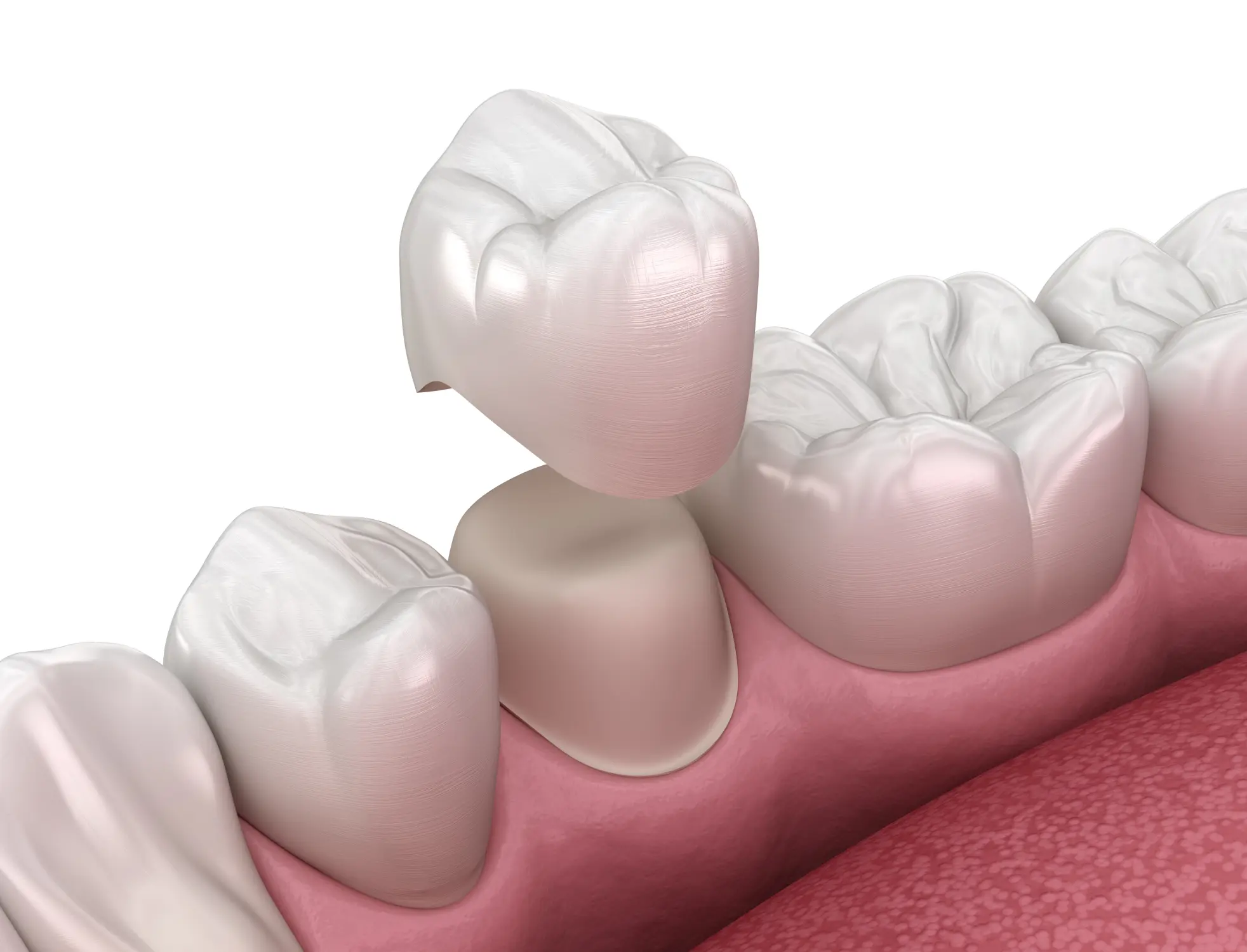
With CEREC same-day crown technology, that process can be condensed significantly. After the tooth is prepared, a digital scan captures the necessary information. The crown is then designed digitally and milled right in the office before being checked, adjusted, and permanently placed.
For many patients, the entire process can be completed in about two hours rather than spread across multiple appointments. There is also no temporary crown to manage while waiting for the permanent restoration to arrive from an outside lab.
Convenience is certainly a major advantage, but speed is not the only reason to use the technology. The digital workflow also allows the dentist to remain closely involved in the design and fit of the final restoration from beginning to end.
What Happens During a Same-Day CEREC Crown Appointment?
A same-day crown appointment begins much like any other crown procedure. The dentist first evaluates the tooth to make sure a crown is the appropriate restoration and then prepares the damaged or weakened tooth to create the space and support needed for the new crown.
Once the tooth has been prepared, a digital scanner captures the tooth, surrounding teeth, and bite. That scan creates the 3D information used to design the crown. Instead of sending a physical impression to a laboratory, the dentist can work with the digital model immediately.
The restoration is then milled from a ceramic block right in the office. Once it is ready, the dentist checks the crown carefully for fit, shape, contacts, and bite. Any necessary adjustments can be made before the crown is bonded permanently to the tooth.
The result is one continuous appointment: prepare, scan, design, mill, adjust, and cement. For someone trying to fit dental treatment between work, family, and everything else competing for time, avoiding a second appointment can be a meaningful advantage.
Do Same-Day Crowns Still Look Natural?
Completing a crown in one visit does not mean simply choosing speed over appearance. Digital design allows the restoration to be customized to the individual tooth, including its shape, proportions, contacts, and relationship with the surrounding teeth. Ceramic materials can also be selected and customized to create a restoration that blends naturally into the smile.
Just as importantly, the dentist can evaluate the crown before it is permanently placed. The fit and bite are checked, adjustments can be made, and the restoration is not cemented until everything looks and feels appropriate.
Same-day technology is useful because it streamlines the process while still allowing the same thoughtful attention to the tooth itself.
Is Everyone a Candidate for a Same-Day Crown?
Same-day crowns work well for many patients, but they are not automatically the right choice for every tooth or every situation.
The dentist still needs to consider how much healthy tooth structure remains, whether there are cracks or fractures, the condition of the surrounding teeth and gums, the patient's bite, and the location of the tooth. In some cases, another restorative approach or a laboratory-made restoration may be more appropriate.
That is an important distinction. The goal is not to use same-day technology simply because it is available. The goal is to choose the restoration and process that provide the best solution for that particular tooth.
For patients who are good candidates, however, digital scanning and in-office milling can turn what once required several weeks and multiple visits into a much more streamlined experience.
Looking for Same-Day Crowns in Denver?
At The Denver Dentists & Implant Center, digital impressions and CEREC technology allow us to complete many dental crowns in a single visit, often in about two hours. Instead of dealing with traditional impression material, a temporary crown, and several weeks of waiting, patients can have the tooth prepared, digitally scanned, restored, and permanently cemented during one appointment.
The first step is finding out what the tooth actually needs. Schedule an evaluation with The Denver Dentists & Implant Center to learn whether a same-day CEREC crown is the right option for you.
Written by The Denver Dentists team. Reviewed for clinical accuracy by Dr. Kenneth Burson, MS, DDS, FAGD. Dr. Burson is the owner dentist at The Denver Dentists & Implant Center in Denver, Colorado. He focuses on comprehensive restorative dentistry, same-day CEREC crowns, ceramic inlays and onlays, implant dentistry, cosmetic dentistry, and long-term treatment planning.
Related Posts
Digital Impressions for Same-Day Crowns in Denver: What to Expect
Full Mouth Dental Implants in Denver: All-on-4, All-on-X, and Fixed Teeth Options
What If You Could Try On Your New Smile? Meet 3D-Printed Veneers in Denver