How Long Will My Dental Implant Last? A Denver Implant Dentist Explains
Written by: Dr. Kenneth Burson, MS, DDS, FAGD
One of the first questions I hear from patients considering a dental implant is a very reasonable one: How long is this actually going to last? The short answer is that a well-planned, well-maintained dental implant has the potential to last a lifetime.
That does not mean every part of an implant restoration is guaranteed to last forever, and it certainly does not mean we can place an implant and forget about it for the next 30 years. But dental implants have an excellent long-term track record. Studies following implants for 10 years or longer have consistently found survival rates well above 90%.
There is a reason for that. We have been placing titanium implants in the human body for decades, both in dentistry and throughout medicine. We understand much more today about implant design, bone integration, placement, restorative planning, and long-term maintenance than we did when dental implants first became widely used.
Still, the implant itself is only one part of the equation.
How Long Do Dental Implants Last?
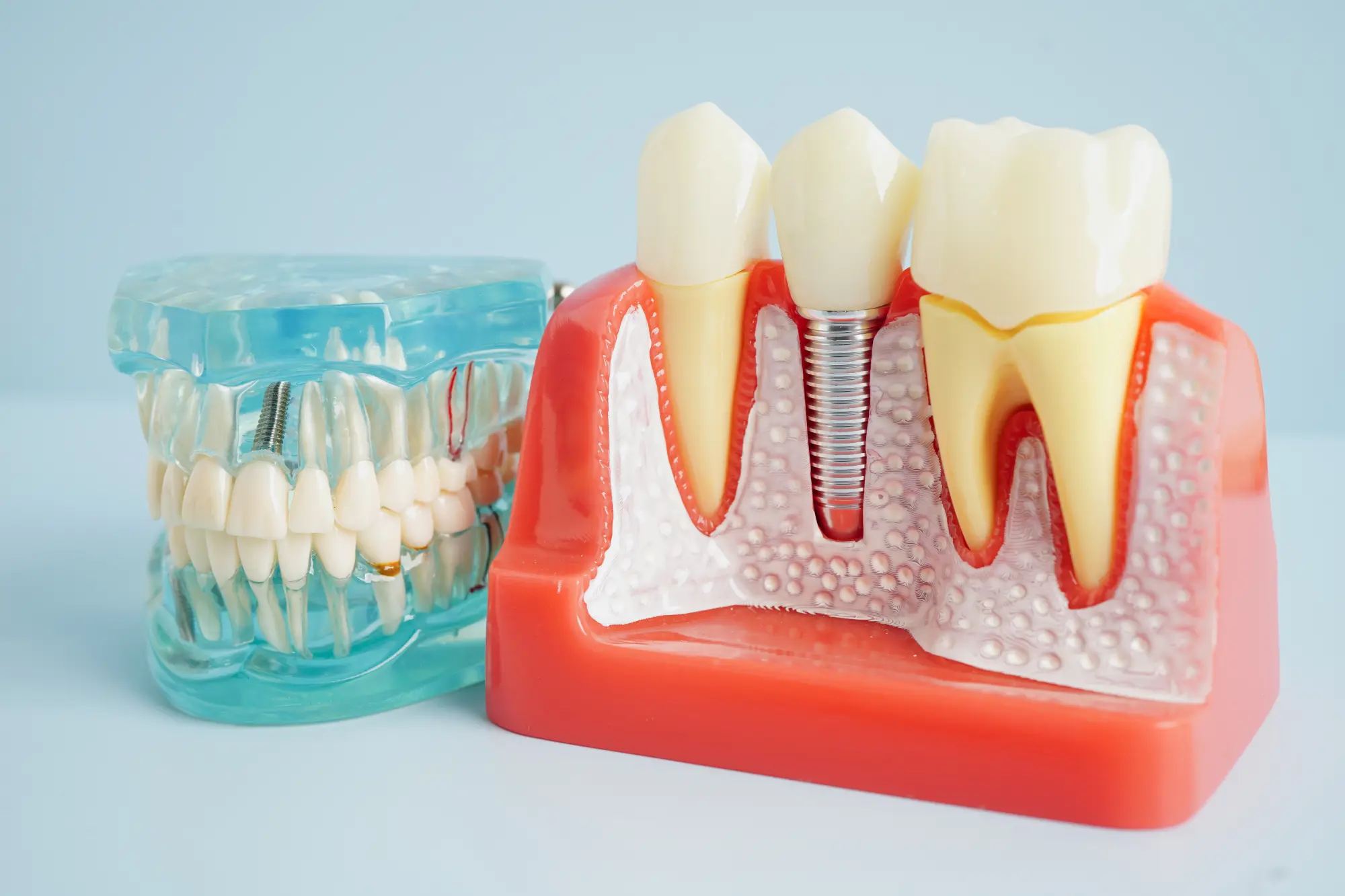
When I talk about a dental implant, I like to explain that what patients think of as the “implant” is actually a three-part restoration.
The implant is the small titanium post placed into the jawbone. As it heals, the surrounding bone integrates with the implant and creates a stable foundation. The abutment connects to that implant.Then the crown sits on top of the abutment and becomes the part that looks and functions like your tooth. That distinction matters when we talk about longevity.
The titanium implant inside the bone can potentially remain healthy and stable for decades, and in many cases, for the rest of a patient’s life. The crown above it is exposed to everyday chewing forces, grinding, clenching, food, temperature changes, and normal wear. Over time, that restorative portion may need to be repaired or replaced even when the implant underneath it remains perfectly healthy.
So when someone asks me, “Will my dental implant last forever?” my answer is usually: the implant itself very well may, but maintaining the entire restoration is an ongoing process.
What Makes a Dental Implant Last Longer?
In my experience, there are two major pieces to long-term implant success.
The first is everything we do before and during treatment.Implant position matters. Bone quality matters. The way the implant is placed matters. The position and shape of the final crown matter. And your bite matters.
A beautifully placed implant can still run into trouble if the crown above it directs too much force into the wrong area. Likewise, an implant restoration has a much better chance of succeeding long-term when we begin with good diagnostics, understand the available bone, place the implant in the appropriate position, and design the final tooth around the way that particular patient bites and chews.
The second major piece happens after you leave my chair: how well you take care of it. Dental implants cannot get cavities, but that does not make them maintenance-free.
How Do You Take Care of a Dental Implant?
Healthy gum tissue and bone are incredibly important to the longevity of an implant.
For most of my implant patients, the basics look very familiar: brush for two minutes twice a day, clean between the teeth and around the implant every day, and stay consistent with professional dental cleanings.
I am also a big fan of a water flosser as an additional tool for many implant patients. It can make it easier to clean around areas that may be difficult to reach with traditional floss alone. Then there are your professional cleanings. Depending on your oral health, gum health, implant history, and individual risk factors, I may recommend maintenance every three, four, or six months.
That schedule is personalized for a reason. An implant that looks great today still deserves to be monitored over time. At those visits, we are looking at the gum tissue, bone levels, bite, restoration, and cleanliness around the implant so we can address smaller changes before they become bigger problems.
I often tell patients that getting the implant is only the beginning of the relationship. Long-term maintenance is what helps us protect the investment.
Can Smoking Cause a Dental Implant to Fail?
Smoking is one of the habits I pay close attention to when evaluating someone for dental implants.
Research has consistently associated smoking with a greater risk of implant complications and failure. Smoking can affect blood flow and healing, and it is associated with greater bone loss and inflammation around implants over time.
That does not automatically mean someone who smokes can never receive an implant. It does mean we need to have an honest conversation about the additional risk and what we can do to give treatment the best chance of success.
The same idea applies to your overall health. Your mouth does not operate independently from everything else happening in your body.
Can Diabetes or Other Health Conditions Affect Dental Implants?
Certain medical conditions can influence how well an implant heals and how predictable it may be over the long term.
Diabetes is a good example. Someone with well-controlled diabetes may still be an excellent candidate for dental implants. Poorly controlled diabetes, however, can interfere with healing and has been associated with greater inflammation and complications around implants.
Other health conditions, medications, bone health, previous gum disease, and your ability to keep the area clean can also influence treatment planning. That is why an implant consultation should involve much more than looking at the empty space and asking, “Can we put a tooth there?” I want to know about your health, your dental history, the quality and quantity of your bone, how you bite, what your home-care routine looks like, and what you expect from treatment.
The question is not simply whether I can place an implant. It is whether we can create an implant restoration that I believe has a strong chance of serving you well for a very long time.
Why Are Dental Implants So Successful Today?
Modern dental implants benefit from decades of research, refinement, and experience.
Titanium has been used extensively in the human body and has a strong history of biocompatibility. Implant designs and surfaces have evolved. Our understanding of how implants integrate with bone has improved. We are better at planning where an implant needs to go before treatment ever begins.
And technology gives us considerably more information than we had when implants first became common in dentistry. At The Denver Dentists & Implant Center, I use 3D imaging as part of the implant planning process so I can evaluate the available bone and surrounding anatomy before placement. That gives us the ability to approach treatment with far more information than simply looking at a two-dimensional image and making an educated guess.
Implant dentistry still requires clinical judgment. Technology does not place the implant for me. But having better information allows me to make more informed decisions about whether an implant is appropriate, where it should be positioned, and what other treatment may be needed to create the right foundation.
What Can Shorten the Lifespan of a Dental Implant?
There is rarely one universal reason an implant fails. Usually, we are looking at a combination of biological, mechanical, and behavioral factors.
Poor oral hygiene can allow inflammation to develop around an implant. Smoking can increase risk. Uncontrolled health conditions can affect healing and long-term stability. Heavy clenching or grinding can place excessive force on the restoration. Poor implant positioning or an improperly designed bite can create mechanical problems. And skipping routine dental visits can allow an issue to progress unnoticed.
This is why I do not view implants as a “put it in and forget about it” treatment. They are remarkably durable. They are also something we want to protect.
How Do I Know If I’m a Good Candidate for Dental Implants in Denver?
If you are missing a tooth or know that a tooth may need to be removed, the first step is simply finding out what your options are. At The Denver Dentists & Implant Center, we start with a consultation. I evaluate your teeth and gums, review your health and dental history, and use the appropriate X-rays and 3D imaging to look at the amount and quality of bone available for an implant.
From there, we can talk through what treatment might involve, whether additional procedures such as bone grafting may be necessary, and what we can realistically expect from the result. I think a lot of anxiety around dental implants comes from the unknown. You hear words like surgery, bone grafting, healing, and implant placement, and suddenly the process can sound much bigger than it needs to.
My job during that first conversation is to make it understandable. You should know what we are recommending, why we are recommending it, what the process looks like, and what you can do to help your implant stay healthy for as long as possible.
Considering Dental Implants in Denver?
Dental implants have become one of the most predictable ways we have to replace missing teeth, and with thoughtful planning and good long-term care, an implant has the potential to serve you for decades.
The goal is not simply to place something in the space where a tooth used to be. I want to build a restoration that fits your bone, your bite, your smile, and your life, then give you the tools to keep it healthy.
If you are considering dental implants in Denver and have questions about longevity, cost, bone grafting, the treatment process, or whether you are a candidate, come talk with us at The Denver Dentists & Implant Center. We can take the appropriate images, evaluate your individual situation, and give you a much clearer picture of what dental implants could look like for you.
Related Posts

Full Mouth Dental Implants in Denver: All-on-4, All-on-X, and Fixed Teeth Options
What If You Could Try On Your New Smile? Meet 3D-Printed Veneers in Denver
How Long Will My Dental Implant Last? A Denver Implant Dentist Explains